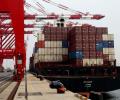
The issue is set to be discussed early next week as the commerce department meets with industry bodies to discuss the widening supply gap for key imports.

Sanjiv Mehta, chairman of the country's largest consumer goods company, HUL, believes that the second wave of the Covid-19 pandemic between April and June this year has been a mere pause in India's consumption story, and that it will not change the country's overall growth trajectory. India is poised for growth, especially in the fast-moving consumer goods (FMCG) sector, Mehta told shareholders at the company's annual general meeting on Tuesday. The signs of recovery are becoming evident with many states lifting lockdown restrictions in recent weeks.

Since April, India has seen multiple strains of the coronanavirus sweep the nation, upending life and businesses alike. Out-of-home retail and discretionary categories such as durables, auto, fashion, lifestyle, hospitality, food services, travel, and tourism have been the worst-hit as Covid cases remain high, leaving state governments with no option but to curtail mobility and economic activity.
India's gross domestic product product (GDP) growth rate between 2011-12 and 2016-17 should be about 4.5 per cent instead of the official estimate of close to 7 per cent, he said in a research paper published at Harvard University. "The Indian policy automobile has been navigated with a faulty, possibly broken, speedometer," he says in the paper.
'The term 'pro-growth' must be qualified somewhat because, while a rising tide will lift all boats, it will not necessarily do so equally.'

Reliance's big-bang entry across the solar ecosystem will cut dependence on Chinese imports drastically. And Ambani's repeated emphasis that RIL's new energy foray will be 'a truly global business' points that his group is playing not just for a share of the Indian pie but to be the OEM in the larger 5,000 GW global market by 2030, points out Shailesh Dobhal.

Govt to play enabler not handler, India never had more decisive government: PM Modi Prime Minister Narendra Modi on Monday cited his dispensation's push for wide-ranging reforms, including the privatisation of Air India, to assert that the country never had a more "decisive government". Launching the Indian Space Association (ISpA), an industry body aspiring to be the voice of the country's space sector, Modi noted that fields like mining, coal, defence and space have been opened to private players, and said his government's clear policy about public sector enterprises is to open those to private industry where its presence is not required. While opening a host of sectors, the government has built a regulatory environment in which priority has been given to national interest as well as the interests of different stakeholders, he said.

However, Icra Rating Principal Economist Aditi Nayar feels that the numbers are a bit too optimistic and need real heavy-lifting by the Centre and the states. "The survey forecasts on real and nominal GDP will require a substantial push from Central and state spending as private sector capacity expansion is anticipated to be intermittent, and sector-specific in the next couple of quarters," she said. Nayar added that private consumption is likely to chart a differentiated recovery across income and age groups. Based on the comments made in the Survey, she expects the Union Budget to incorporate a growth in gross tax revenue of 15-16 per cent.

India has over 4,000 medium tanks, but not a single light tank. It remains to be seen whether the Ladakh face-off with China galvanises a change, observes Ajai Shukla.

A report by parliamentary standing committee on commerce noted that Indian industry was getting decimated by China dumping its cheap products in India.

After unseasonal rains, supply disruptions and pandemic-induced woes pushed retail inflation well over the Reserve Bank's comfort zone in 2020, the scenario is likely to stay that way at least in the short term as economic recovery slowly gains foothold. For most part of this year, pricier food items pushed the retail inflation, based on Consumer Price Index (CPI), higher in the range of 6.58-7.61 per cent, except for March when the reading was 5.91 per cent. Experts believe retail inflation is likely to average around 6.3 per cent this fiscal and mostly will remain sticky going forward owing to pick-up in demand across sectors.
Stoutly defending the agri laws, Modi said it is one thing if a political party makes a promise and is unable to deliver on it but what is a "particularly undesirable" and "detestable" trait is some of these parties made promises on the lines of the reforms enacted by his government and have now done a U-turn and spread "the most malicious kind of misinformation on the promises they themselves had made".

India, which appears to have been pushed back to being the world's sixth biggest economy in 2020, will again overtake the UK to become the fifth largest in 2025 and race to the third spot by 2030, a think tank said on Saturday. India had overtaken the UK in 2019 to become the fifth largest economy in the world but has been relegated to 6th spot in 2020. "India has been knocked off course somewhat through the impact of the pandemic. "As a result, after overtaking the UK in 2019, the UK overtakes India again in this year's forecasts and stays ahead till 2024 before India takes over again," the Centre for Economics and Business Research (CEBR) said in an annual report published on Saturday. The UK appears to have overtaken India again during 2020 as a result of the weakness of the rupee, it said.

'The Modi government's lack of foresight has compelled India to become an importer of vaccines today and even now, their "vaccine strategy is flawed and discriminatory'

As per commerce and industry ministry data, food inflation fell to 4.91 per cent in March from 7.79 per cent in the previous month.

The latest Hyundai i20 is an exciting car, given the overall drive experience, transmission, ride quality and tech. And while it may not be as low cost as a Maruti or come with the "heavy German steel-feel" of the Volkswagen, it does carve out a niche for itself at pole position with a combination of technology, styling, drive and ride comfort, and low cost of ownership, says Pavan Lall.
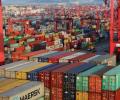
Imports also fell for the eighth consecutive months, down 0.75 per cent to $41.14 billion in January, widening the trade deficit to a seven-month high of $15.17 billion.

Among other things, the agenda is likely to focus on increasing private investment, employment generation and giving relief to the farm sector
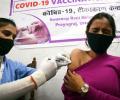
'Scientific data has proven that masks can reduce COVID-91 transmission by 53 per cent...A booster dose of vaccine, even if it works, is just a temporary fix'

Formula One stewards rejected on Friday a Red Bull protest against a new steering system used by champions Mercedes in practice for the season-opening Austrian Grand Prix.
The economy has shown sharp resilience in the past and has also bounced back in good time. We could hence expect a similar trajectory next year, observes Madan Sabnavis, chief economist, CARE Ratings.

Six months into his new role, Vishal Wanchoo, president and chief executive officer, GE, South Asia, speaks to Jyoti Mukul about how its horizontal business lines of additives and digital are playing across its verticals.
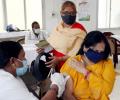
With the threat of a third Covid-19 wave looming large, companies are scrambling to protect employees and keep operations safe--from a no-jab-no-entry-at-workplace policy to ramping up vaccination, it's an all-out effort to prevent the scale of devastation seen in the first two waves. At least two top steel companies--Tata Steel and ArcelorMittal Nippon Steel India (AM/NS India)--are pushing for vaccination certificates for entry into work premises. AM/NS India, a joint venture between world's leading steelmaker, ArcelorMittal, and Japan's Nippon Steel, is set to make vaccination the certificate a requirement from July 1.

The operators say that the move to have an India-specific standard will raise the costs not only of telecom networks but of chipsets for mobile devices because they will have to be made for the local market and, as such, will not enjoy global economies of scale.
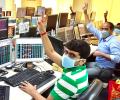
As Covid-19 cases recede, India Inc is once again tweaking work rules. Big tech companies such as TCS, Wipro and Infosys have either begun or are in the process of calling employees back to office in a staggered manner. A survey by Aon, a global professional services firm, has found that 60 per cent of tech firms now expect every second employee to come to office. More than half of the employees working in engineering and manufacturing firms are also being asked to return to work.

'What would we feel if we found the world behaving the way it has?' 'Forced to fight our own prolonged battle; nobody from outside really demanding that the war end or actively working to make it end, and above all, a completely toothless United Nations reduced to pleading for a halt to the violence,' notes Shyam G Menon, exactly a month after Vladimir Putin ordered the invasion of Ukraine.
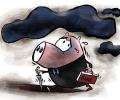
S&P Global Ratings on Wednesday said Indian banks face a systemic risk as the second COVID wave will impair the performance of financial institutions in the April-September period. Stating that economic recovery remains highly vulnerable to setbacks due to COVID, particularly if fresh outbreaks trigger new lockdowns, S&P said the banking sector's weak loans will likely remain elevated at 11-12 per cent of gross loans in the next 12 to 18 months. "The second wave has front-ended weakness in asset quality," said S&P Global Ratings Credit Analyst Deepali Seth Chhabria. "Financial institutions face a strained first half amid weak collections and poor disbursements."
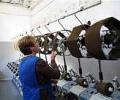
IT spending by the manufacturing sector in the country is expected to grow at 14.5 per cent to touch USD 8.78 billion by 2016, driven by segments including automotive, chemicals and consumer products, research firm IDC said.

Finance Minister Nirmala Sitharaman on Monday assured the industry that momentum of economic reforms will continue to make India a hotspot of global investment. India has turned the crisis created by COVID-19 pandemic into an opportunity to push the economic reforms, which remained pending for decades, she said while addressing the National MNC's Conference 2020 organised by industry chamber CII.

After the government backtracked on its plan to impose Customs duty on pricier components, Samsung has decided to begin production of key mobile parts in Noida from April.

Mutual funds (MFs) are set to be net sellers of Indian equities for the first time in the past seven financial years, having sold stocks worth about Rs 1.27 trillion so far in 2020-21 (FY21), making it the highest net sales on record in a financial year. MFs had been net buyers in the previous six financial years, including purchases of over Rs 1.41 trillion in FY18, Rs 88,152 crore in FY19, and Rs 91,814 crore in FY20. The last time they offloaded Indian equities was in FY14, when they net sold stocks worth Rs 21,159 crore. In contrast, foreign portfolio investors (FPIs) have ramped up buying in FY21, purchasing more than Rs 2.6 trillion worth of shares.

The government has been gearing up to place tighter restrictions on the import of 371 items - ranging from toys and plastic goods to sports items, and furniture worth $127 billion.

While home-grown firms like Tata and Mahindra have been actively participating in the government's e-mobility mission, by launching electrified versions of their existing models, the global firms believe electric is not the best solution for a country where the primary source of power generation is coal, and where infrastructure is a big impediment.

'In May 2020-2021, nearly 10 crores (100 million) lost jobs. 'Covid is not the reason for the present crisis. It aggravated the crisis.'
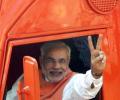
The challenge will be to force the officials of his government to own this vision.

To curb petrol import costs, the NDA government is pushing for a 10% ethanol mix in petrol

In his address to the nation on the eve of 73rd Republic Day, President Kovind noted that democracy, justice, liberty, equality and fraternity form the bedrock of India and stressed that the observance of Fundamental Duties mentioned in the Constitution creates the proper environment for the enjoyment of Fundamental Rights.

The force later examined the tunnel and found plastic sandbags on its mouth that had "Pakistani markings" on them.

Experts say Biyani will now become a contract manufacturer of fashion and FMCG products, with the Reliance group being one of his customers.
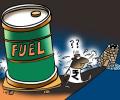
Inflation in food articles, fuel and power contracted in July.
 © 2026 Rediff.com - Investor Information - Advertise with us - Disclaimer - Privacy Policy - Sitemap - Feedback - About us - Terms of use - Grievances